Blog
Botulinum toxin (Botox) A for reducing the appearance of facial wrinkles
Jul
Botulinum toxin (Botox) A for reducing the appearance of facial wrinkles
Botulinum Toxin Type A is a potent neurotoxin that is produced by a gram-positive bacteria clostridium botulinum. Its utilization in the treatment of various medical condition has expanded over the years in both medical and esthetic uses. It is being preferred by most physicians due to its efficacy and lack of side effects. It can be used as monotherapy or combined therapy.
Botulinum toxin (Botox) is a drug made from a toxin produced by the bacterium Clostridium botulinum. In large amounts, this toxin can cause botulism, an illness that affects the nerves. Botox has been used since the 1970s in the field of ophthalmology, and in the last 20 years, its use has expanded to various health scopes, especially dermatology.1,2
Botox consists of 7 types of neurotoxins; however, only toxins A and B are used clinically. Botox A is used for several disorders in the field of medicine, particularly in dermatology, for cosmetic purposes.3 The first type of Botox introduced to the market was onabotulinum toxin A. In 2002, it was recommended to be used as a cosmetic treatment for glabellar frown lines by the Food and Drug Administration (FDA).2,4,5 The second formulation of onabotulinum toxin A, which was produced in France, obtained its license to be used for esthetic purposes from the European Union in 2006 and was approved by the FDA in 2009.5,6 Botox type A has become a term used by the society to describe all ingredients used in cosmetic treatments.7
A study in 1994 reported the effectiveness of Botox A for reducing the appearance of facial wrinkles; since then, it has been used as a cosmetic treatment.8 Botox injections can be used to treat glabellar frown lines, wrinkles around the lips (smoker’s lines) and marionette lines, platysmal bands in the neck, strabismus, blepharospasm, cervical dystonia, hyperhidrosis as well as synkinesis following facial surgery.1,2,9
The objective of this article is providing a good literature review regarding Botox as a treatment for reducing facial wrinkles and also comparing it with other modalities such as fillers, skin peptide and facial muscle exercise. The main focuses are the mechanism of action, indication, contraindication, dosage, clinical effect, safety, side effect, and complication.
Mechanism of action
The mechanism of action of Botox includes the following four main steps:
- The first step is binding of the toxin to specific receptors on the surface of the presynaptic cells, mediated by the C-terminal of the heavy chain. This step occurs over approximately 30 mins.10
- The second step is internalization, which is an energy-dependent receptor-mediated endocytic process. In this step, the plasma membrane of nerve cells invaginates around the toxin-receptor complex, forming a vesicle containing a toxin in nerve terminal.10
- The third step is translocation. Following internalization, the disulfide bond is cleaved and the 50-kDa light chain of the toxin is released across the endosomal membrane of the endocytic vesicle into the cytoplasm of the nerve terminal.10
- The last step is blocking. The light chain of serotypes A and E inhibit the release of acetylcholine by cleaving the cytoplasmic protein (SNAP-25) needed for the docking of acetylcholine vesicles on the inner side of the nerve membrane of the nerve terminal.10
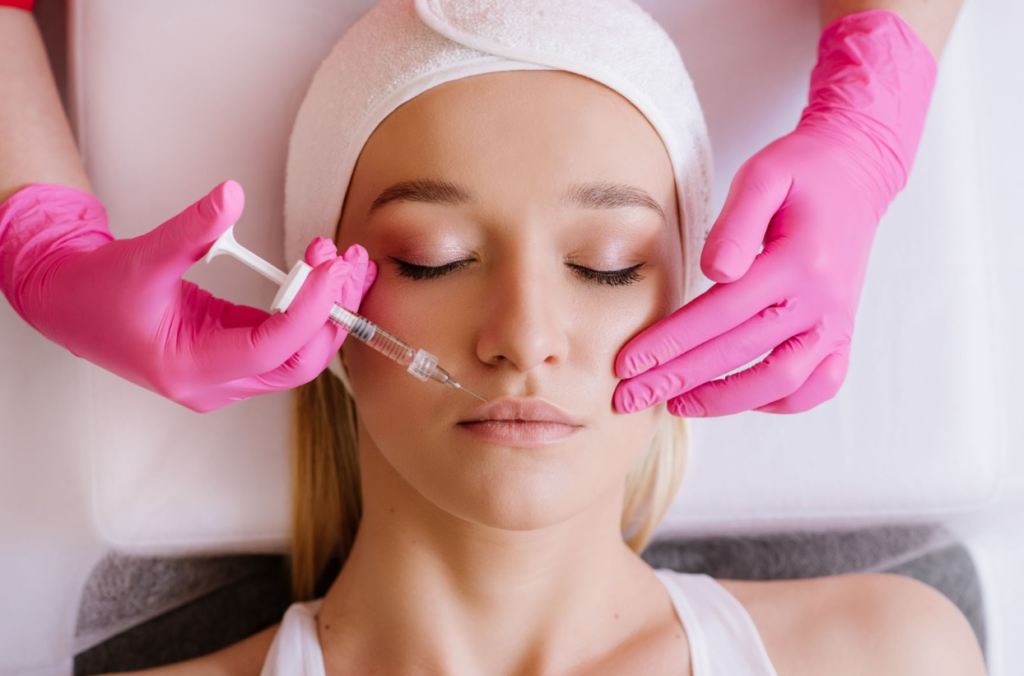
Following the injection, the toxin diffuses into the tissue until it binds selectively and reversibly in the presynaptic terminal of the neuromuscular junction and then attaches to the specific protein-membrane responsible for acetylcholine excretion.5,6 The toxin immediately inhibits the release of acetylcholine in the neuromuscular junction causing relaxation of local muscles that is reversible, resulting in reduced facial wrinkles/lines, of which some are due to constant facial muscle contractions.11,12
Indication
In the field of dermatology, Botox is generally injected into the muscles of facial expression.2 Most of these muscles are attached to soft tissues rather than bones, and by contracting, they pull across the skin to give facial expressions.2,13 In esthetics, Botox is used for reducing glabellar frown lines, crow’s feet at the side of the eyes, horizontal forehead creases, wrinkles around the mouth, nasolabial folds and smoothing out neck and chest/cleavage wrinkles.2,14 It also can be used to elevate the eyebrows and treat problems such as hyperhidrosis, lichen simplex, pompholyx (dyshidrotic eczema) and acne vulgaris.7,15 Botox cannot be used to prevent other signs of aging such as dry skin, pigmentation disorders and vascular abnormalities.16
Contraindication
Contraindications with the use of Botox include patients with myasthenia gravis, amyotrophic lateral sclerosis, multiple sclerosis, Eaton Lambert syndrome, women who are pregnant and breastfeeding, neonate and children, patients with focal and systemic infections, patients who are hypersensitive or allergic to Botox and patients who had previously undergone lower eyelid surgery.17–20
Dosage
The standard dose for Botox usage is 20 Units. The minimum dose for treating glabellar frown lines is 20 Units as it was found that dosing 20–40 Units of Botox was more effective than 10 Units alone for reducing glabellar frown lines.16 For male patients, Botox A dosage is effective when started from 40 Units.21 Men require higher doses of Botox as they have a greater muscle mass than women.22,23
Clinical effects
The clinical effects of Botox are seen on the first to the fourth days after injection, followed by 1–4 weeks of maximum effect, which will resolve after 3–4 months. In order to prolong the effects of Botox from six months to one year, the treatment should be repeated for one year or more.24 The duration of Botox effect varies among individuals due to differences in muscle arrangements, meaning that different individuals may require different doses of Botox. The effect will last up to 120 days.25,26
Safety
Botox is a drug with a broad margin of safety (lethal dose 50% (LD50) in humans can reach up to 40 U/kg BW). Therefore, its use in cosmetics is relatively safe. Botox is relatively safe and effective for treating facial wrinkles.27,28 Botox A does not cause persistent changes at the nerve terminals and targeted muscles. In general, it does not cause any long-term adverse or side effects in the field of dermatology.29,30
Side effects
The possible side effects of Botox include bleeding, swelling, erythema and pain at the injection sites.31 These side effects can be avoided by using thinner needles and diluting Botox with saline. Headaches may also occur following Botox injections but will resolve after 2–4 weeks. This side effect can be treated using systemic analgesics.27,28 Other side effects that have also been reported to occur include malaise, nausea, influenza-like symptoms and ptosis.31 Ptosis usually occurs in patients who use Botox to treat the glabellar area and is caused by local diffusion of Botox, which can remain for several weeks but can be treated with alpha-adrenergic agonist ophthalmic drops. Ectropion may also develop due to the local diffusion process of Botox when injected into the lower eyelids. Also, patients who undergo Botox injections to treat crow’s feet or bunny lines (periorbital) may experience strabismus caused by inadvertent injection of Botox and local diffusion of Botox.31,32 Nevertheless, all of these side effects will gradually resolve after the paralytic effect of the toxin dissipates.33,34
Complications
Complications with cosmetic Botox injections rarely occur. The most common complications are ecchymosis and purpura, which could be minimized by compressing ice on the injection sites before and after Botox injection.27,28 Botox should be injected in minimal concentrations, with the appropriate dose and injected at least 1 cm from the superior, inferior or lateral margin of the orbital bone. Following treatment, patients should not manipulate the injected sites for 2–3 hrs and should remain in an upright seating or standing position for 3–4 hrs.35
Botox derivates-acetyl hexapeptide-8
Acetyl hexapeptide-8 or acetyl hexapeptide-3 which is more known by the name Argireline® is the most peptide used to treat wrinkles on the skin as an alternative to botox therapy.36 Acetyl hexapeptide-3 is very similar to the N-terminal end of SNAP-25 protein, competing with the N-ethylmaleimide-sensitive factor attachment protein receptor complex which is an important protein in muscle contraction and the occurrence of wrinkles on the face.37 When compared with Botox, acetyl hexapeptide-8 has a toxic potential 4,000 times lower and can be applied topically in the form of skin creams or via injections.35,36
An animal study conducted by Wang et al38 regarding the efficacy of Argireline for forty 42-month-old aging mice induced by skin injection using D-galactose showed that rats given topical Argireline 10% in oil-and-water emulsions twice a day in six weeks had lower type I collagen compared with the control group (69.82±4.38 Vs 73.53±8.21; p<0.01) and higher amount of collagen type III compared to the control group (19.71±7.52 Vs 18.43±5.66; p<0.05).
Another study conducted by Raikou et al39 on the use of 10% Argireline topical twice daily on 24 facial skins of women aged 30–60 years for 60 days, found a significant decrease in transepidermal water loss (TEWL) in the Argireline group compared to the placebo group. Water content from the skin is very dependent on TEWL and the hydration level of the epidermis, which contributes to the health of skin and young skin appearance. The decrease in TEWL that occurred in the study was thought to be due to the use of topical Argireline which caused an increase in moisturization of the stratum corneum. There were no side effects observed in this study such as flushing, stinging, burning, redness, or desquamation of the facial skin.
The explanation provides a new solution that acetyl hexapeptide-8 can be an alternative therapy of botox for person who does not want to use the injection method because it can be used as a topical agent. Also which has a better level of safety compared to botox.
Comparison of Botox with dermal fillers
The most widely used types of dermal fillers are those made from hyaluronic acid, which is a glycosaminoglycan unit, which is composed of replicated glucuronic acid and N-acetyl-glucosamine units.40 Hyaluronic acid is naturally a polysaccharide found in body tissues such as the skin and cartilage. It is very hydrophilic (attracts water), which causes pressure swelling which can withstand compressive forces that make hyaluronic acid the ideal substance as dermal fillers.41
The contraindications to use are quite similar to botox such as hypersensitivity to the components of fillers, bleeding disorders, history of anaphylaxis because hyaluronic acid products are made from bacterial fermentation, the history of allergies in gram-positive bacteria is contraindicated.42
Complications that are very likely to occur in the use of fillers because they are done by injection are bruising and hematoma. The use of filler is very dependent on operator expertise so that there are several side effects associated with injecting techniques such as unrealistic patient expectation, undercorrection, overcorrection and lumping.43
Lumping is something that is very often caused by the placement of non-homogeneous filler material and lack of massage in the injection area. The filler when injected will fill a narrow space in the skin by doing massage on the injection area, the filler will be compacted and then mixed to form a closer and smoother texture. Failure in this process can cause irregularities of the skin that can be seen and touched (lumping).44
A serious complication that can occur in the use of fillers is focal necrosis, although it is very rare in 0.001% of cases.41,42 The glabella area is the most common place for focal necrosis in filler use. Early signs of focal tissue necrosis usually appear very quickly within 24–48 hrs.43,44 This is caused by the occlusion caused by the direct effect of intravascular injection. This can be addressed if the clinician is aware of impending necrosis sign, and the first antidote treatment is injection of hyaluronidase 10–30 U per 2-cm2 skin area.44
Both treatment, botox and fillers are very operator-dependent and have very similar side effects. Both of these therapies have antidotes in dealing with the conditions of side effects that occur.
Comparison of Botox with facial muscle exercise for facial rejuvenation
Botox has an anti-wrinkle effect through its mechanism of action on the neuromuscular junction which causes relaxation of facial muscles thereby reducing facial wrinkles. But facial exercise therapy provides a different perspective by exercising, strengthening, moving or manipulating the facial muscles.45,46 This approach is a trend because it is not invasive, cheap and the services are mostly carried out by non-medical professions. The effects of anti-wrinkle obtained by the facial exercise method are still a debate, but it is believed that the effects obtained are a result of increased muscle tone, the increase in muscle volume obtained from facial exercises will tighten the skin which causes a reduction of facial wrinkles. Moreover, the skin will experience the benefits of facial exercise due to improvements in waste product drainage and improvement of tissue regeneration as a result of improved blood flow and facial lymphatics circulation.47,48
A study conducted by De Vos et al49 involving 18 Caucasian women with an average age of 40 years. The samples were divided into two groups (interventions and controls). The intervention group was given facial exercise for seven weeks and then evaluated the condition of the face (judged by taking photographic of the faces) on conditions before and after the intervention. The assessment was carried out using a visual analog scale (VAS), which is a 100 mm line score with the “young” and “old” panels on the right and left ends. The facial exercise intervention has given focuses on 5 points, (1) exercise to reduce horizontal wrinkles on the forehead by exercising frontalis muscle, (2) exercise to reduce vertical wrinkles above the lips by training the superior part of the orbicularis oris muscle, (3) exercise to reduce nasolabial folds by training the orbicularis oris muscle and minor zygomaticum muscle, (4) exercise to reduce double chin by training masseter, sternocleidomastoid, and mylohyoideus muscle. Assessment is done by comparing the five areas targeted in the intervention. It was found that the VAS value was significantly younger in the forehead and nasolabial folds in the post-intervention condition, but there was no improvement in the upper lip area, jaw line and under the chin area, and this improvement only occurred in the intervention group and not in the control group.
Facial exercise may provide a new alternative in reducing facial wrinkles, does not require invasive procedures and can be done without medical profession expertise. However, because there are still very limited clinical trials that compare the effects of facial exercise and the mechanism of action in reducing wrinkles that are still vague, this therapy has not been widely used compared to botox and dermal fillers.
